Digital Photography
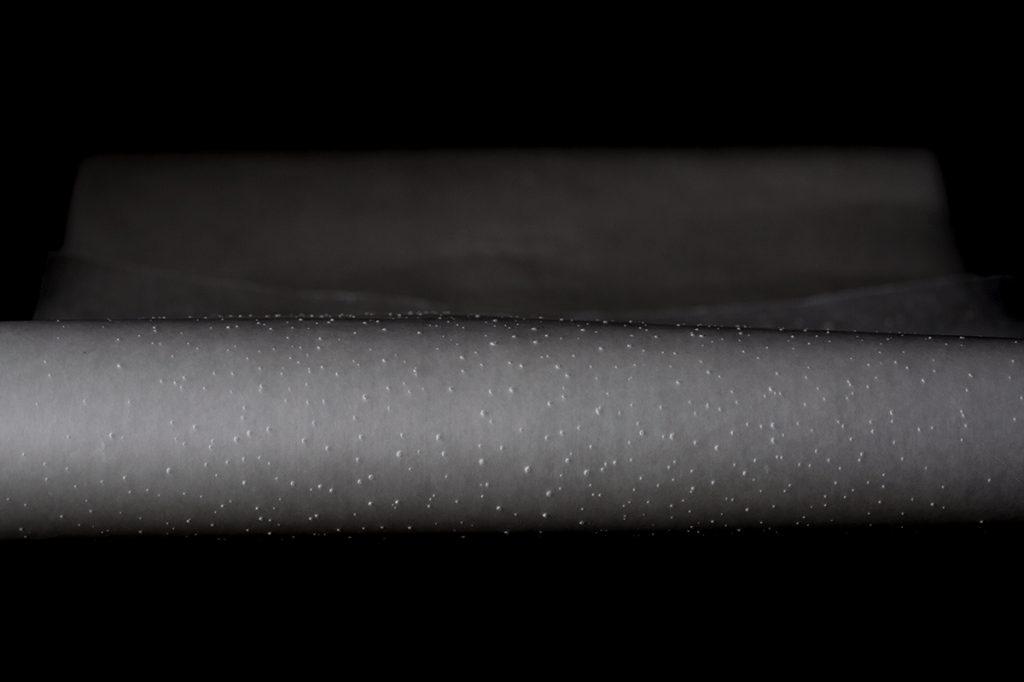
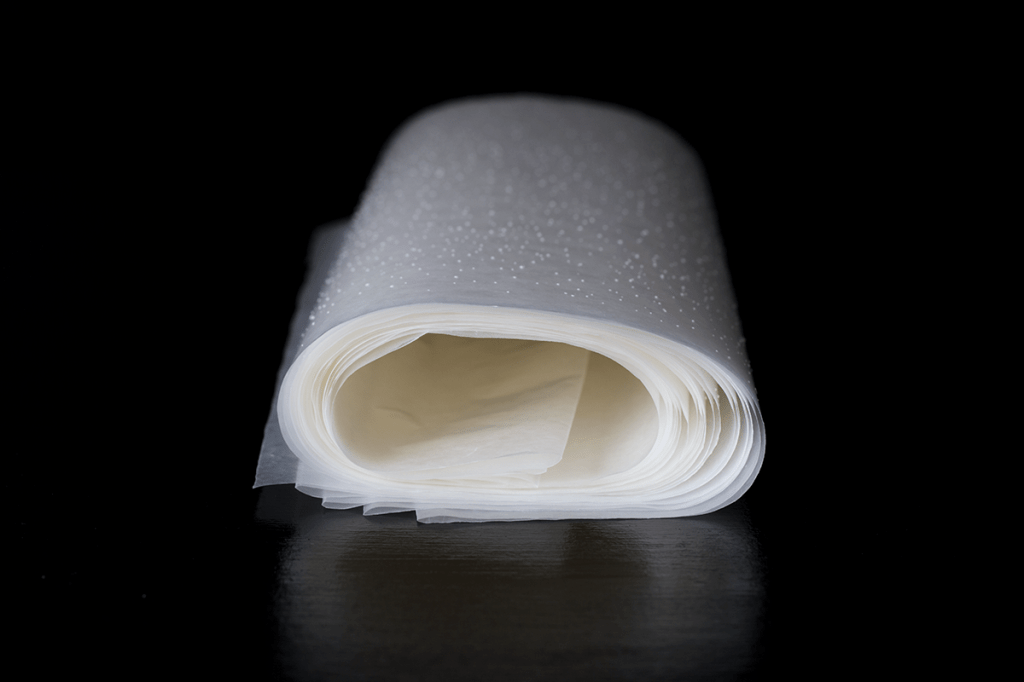
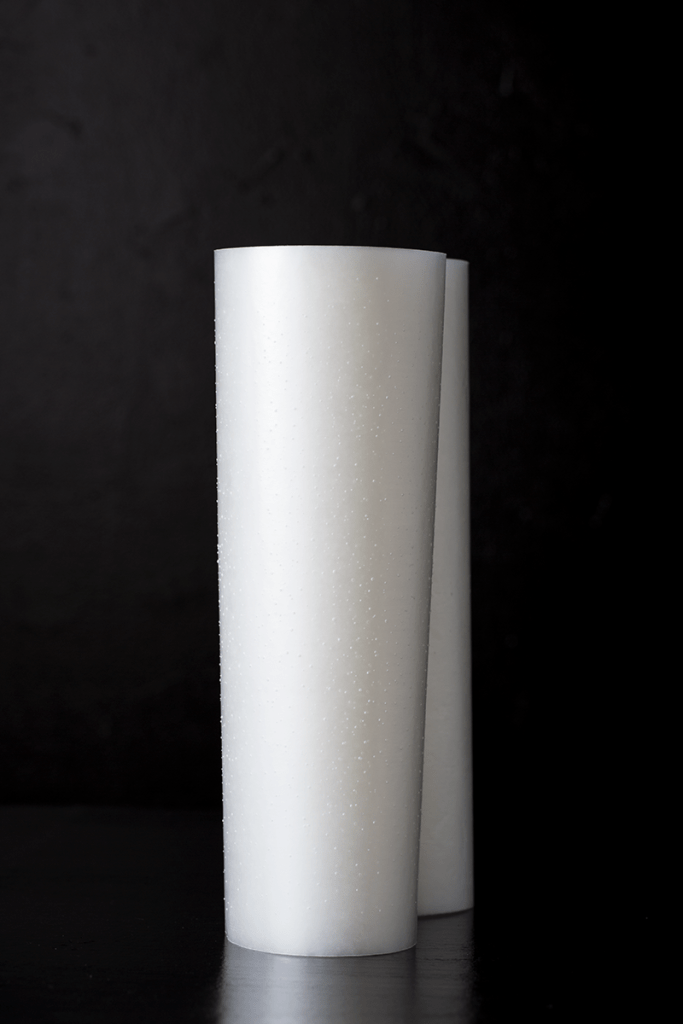
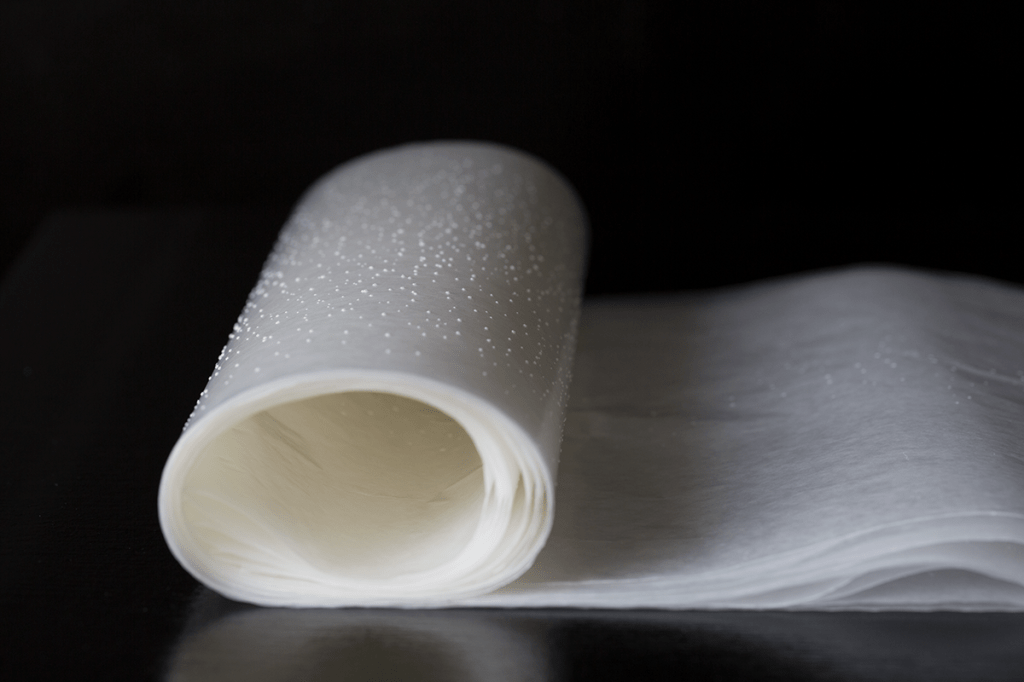
Wax paper functions as a material of protection and containment: it shields food, regulates moisture, and mediates the boundary between inside and outside. At birth, the human body is similarly enveloped in vernix caseosa, a white, waxy substance that protects the newborn’s delicate skin during its transition into the world. I am drawn to wax paper for its material qualities—its translucency, sensitivity, and apparent fragility paired with unexpected strength.
In this work, wax paper operates as both material and metaphor. It echoes the protective function of vernix caseosa while also evoking the labor of motherhood, which occupies a liminal space between vulnerability and resilience. Maternal care, like wax paper, is flexible, responsive, and quietly sustaining, yet often overlooked precisely because it functions so effectively. Its value lies not in singular moments of visibility, but in continuous maintenance and protection.
The act of puncturing wax paper with kitchen tools introduces another critical dimension. Each hole is produced through repetitive, ordinary gestures using implements associated with domestic labor. These perforations mark time and effort, registering care not as a singular event but as an accumulation of actions. While each gesture may appear small or inconsequential, together they alter the material’s surface and structure, mirroring how repetitive caregiving responsibilities gradually shape the body, emotions, and identity of the caregiver.
Through this process, the work renders visible the invisible value of maternal labor—labor that is cyclical rather than linear, ongoing rather than complete. The pierced wax paper becomes an archive of care, bearing traces of endurance, attention, and responsibility. What remains is not damage, but evidence: a material record of how repetition sustains life, even as it leaves marks that are rarely acknowledged within broader social or institutional frameworks.

 Ting Zhou >> mHealth Design Lab